
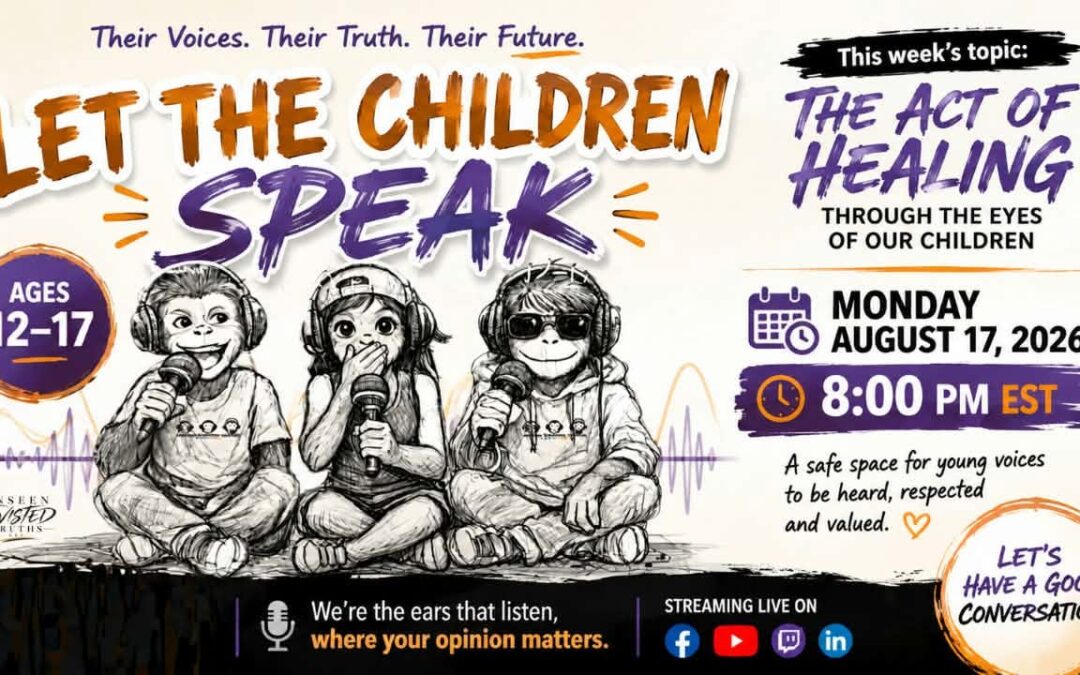
Through the Eyes of Our Children -THE ACT OF HEALING
What does The Act of Healing mean when you are still growing?
Adults talk about healing all the time.
We talk about forgiveness.
We talk about letting go.
We talk about moving forward.
We talk about learning from painful experiences.
And when children are hurt, adults often decide what healing should look like for them.
We tell them:
“You’ll be okay.”
“Just forget about it.”
“They said they were sorry.”
“Don’t let it bother you.”
“You have to forgive.”
Sometimes those words may be meant to help.
Yet how often do we stop and ask the child:
What does healing mean to YOU?
That is where this conversation begins.
Monday’s Let The Children Speak conversation approaches The Act of Healing differently.
Instead of adults talking about children’s healing, we’re asking young people themselves what healing looks and feels like through their eyes.
What is healing?
Can you forgive someone and still be hurt?
Does saying sorry fix something?
What helps when you’re upset?
Can adults sometimes make healing harder?
Do you have to forget something in order to move forward?
We cannot have this conversation from an adult perspective while pretending we already know what children think.
So we’re leaving those questions open.
This time, the children get to answer.
THE ACT OF HEALING, WHAT DOES HURT LOOK LIKE THROUGH THEIR EYES?
Children experience hurt too.
It may come from losing a friendship.
Being bullied.
Feeling left out.
Having someone break their trust.
Changes within their family.
Feeling misunderstood.
Being embarrassed.
Having their feelings dismissed.
Or experiencing something they don’t completely know how to explain.
An adult may look at something happening in a child’s life and believe it isn’t a big deal.
To the young person experiencing it, that same situation may feel enormous.
When we talk about The Act of Healing, maybe one of the first questions we need to ask isn’t how a child should heal.
Maybe the first question is:
What hurt?
How does a young person describe hurt?
What makes one experience easier to move through than another?
What happens when something that hurts a child doesn’t seem important to the adults around them?
And what happens when a child doesn’t have the words to explain why something hurts?
Those answers belong to them.
THE ACT OF HEALING, DOES “I’M SORRY” MAKE THE HURT GO AWAY?
Children are often taught to apologize.
Someone does something wrong.
An adult steps in.
“Tell them you’re sorry.”
The apology happens, and everyone is expected to move forward.
Yet what happens when the person who was hurt isn’t ready?
Does an apology automatically repair trust?
Can you accept someone’s apology and still need time?
Can you forgive someone and still be hurt?
Can you forgive someone and decide you don’t want the same relationship with them?
Does saying “I’m sorry” always mean the person understands what they did?
And what does a young person need after the apology?
These aren’t only adult questions.
Young people encounter them too.
So rather than telling them what an apology is supposed to mean for The Act of Healing, we’re going to ask.
THE ACT OF HEALING, WHAT DOES FORGIVENESS MEAN TO A CHILD?
Adults often connect forgiveness with healing.
Yet even adults don’t always agree about what forgiveness means.
Does forgiving mean forgetting?
Does forgiveness mean allowing someone back into your life?
Does it mean you aren’t angry anymore?
Can you forgive someone and still have boundaries?
Can you still love someone and need distance from them?
Can you heal without forgiving?
Does forgiveness happen immediately, or can it take time?
And perhaps most importantly:
What does forgiveness mean to a child in the first place?
Instead of giving young people our definition, The Act of Healing gives us an opportunity to hear theirs.
Their understanding may be similar to ours.
It may be completely different.
We won’t know until we listen.
HOW DO CHILDREN KNOW WHEN THEY’RE HEALING?
Healing doesn’t always announce itself.
There isn’t necessarily one moment when someone wakes up and says:
“I’m healed.”
So how does a young person know?
Is healing something you feel?
Is it something you notice over time?
Does healing mean the hurt disappears?
Can you still hurt while you’re healing?
Can you have a good day and then a difficult one?
Does The Act of Healing look different depending on what happened?
And who gets to decide when someone has healed?
We could answer those questions from an adult perspective.
We’re not going to.
We’re going to ask the children.
WHAT ACTUALLY HELPS?
Adults have many ideas about what children need.
Sometimes adults may understand exactly what a young person needs.
Other times, what we think is helpful may not be helpful to them at all.
When a young person is hurting, what actually helps?
Do you want advice?
Do you want someone to sit beside you?
Do you want space?
Do you want someone to ask questions?
Do you want to talk immediately?
Do you need time before you’re ready?
Does music help?
Writing?
Art?
Sports?
Friends?
Family?
Being outside?
Being alone?
Does talking help?
Or do you sometimes just need someone to listen without trying to fix anything?
There isn’t one answer we’re looking for.
The Act of Healing may look completely different from one child to another.
That’s why we’re asking.
CAN ADULTS SOMETIMES MAKE HEALING HARDER?
This may be one of the more uncomfortable parts of the conversation.
Adults are supposed to protect, guide, teach, and support children.
Yet having good intentions doesn’t automatically mean adults always get it right.
What happens when a child tries to explain something and hears:
“You’re too young to understand.”
What happens when they’re told they’re being dramatic?
What happens when an adult immediately gives advice without first listening?
What happens when adults decide a child should be “over it” already?
What happens when a child doesn’t feel comfortable telling an adult what happened at all?
And what happens when the adult is part of the reason the child is hurting?
If we’re going to talk honestly about The Act of Healing, we also have to be willing to ask young people what adults may misunderstand about it.
Not to blame.
Not to judge.
To understand.
Because adults may learn something simply by listening to the answer.
DOES MOVING FORWARD MEAN FORGETTING?
We often hear people say:
“You have to let it go.”
Yet what does letting go actually mean to a young person?
Does moving forward require forgetting what happened?
Can you remember something and still heal?
Can an experience change you without controlling you?
Can you learn something from hurt without pretending the hurt was okay?
Can you move forward and still have difficult days?
Can you heal and still carry part of what happened with you?
Again, we could offer adult explanations.
Instead, we’re leaving the questions where they belong.
With the children.
THE ACT OF HEALING — THROUGH THE EYES OF OUR CHILDREN
On Let The Children Speak, we’re not bringing young people together so adults can teach them how they’re supposed to heal.
We’re asking them to tell us what The Act of Healing means through their eyes.
What does healing mean to you?
What does hurt feel like?
What helps when you’re hurting?
Does saying sorry fix everything?
Can you forgive someone and still be hurt?
Do you have to forget something to move forward?
What do adults misunderstand about how young people heal?
And perhaps one of the most important questions:
When you’re hurting, what do you wish adults would do differently?
There are no right answers.
There are no answers we’re waiting for them to give.
There are simply young people with thoughts, feelings, experiences, and perspectives worth hearing.
That is the purpose of this conversation: giving young people ages 12–17 a safe and respectful space to share their perspectives about healing, emotions, forgiveness, growth, and moving forward—in their own words.
THIS TIME, WE’RE ASKING
Sometimes adults talk about what children need.
We talk about what children feel.
We talk about what children should do.
We talk about how children should respond.
And we talk about how children should heal.
This time, we’re asking them.
Because The Act of Healing isn’t something we should define for another person without first listening to their experience.
And if we truly want to understand The Act of Healing through the eyes of our children, we have to give them the opportunity to tell us what they see.
FROM THE PEOPLE’S PODCAST TO THE CHILDREN’S VOICES
Week after week, The People’s Podcast creates a space for people to talk, question, share their experiences, challenge perspectives, and have conversations that matter.
The people are always talking.
Now, it’s time to…
LET THE CHILDREN SPEAK
The Act of Healing — Through the Eyes of Our Children
Monday, August 17, 2026
8:00 PM EST
Ages 12–17
Their experiences.
Their perspectives.
Their voices.
And this time—
let’s listen.